As society’s challenges grow more complex, data science and artificial intelligence (AI) are increasingly important research tools for engineers. To effectively apply AI such as machine learning to real-world problems, researchers work with nonlinear systems, in complex environments and with ever-changing factors.
Researchers across ME are expanding future applications of machine learning, discovering new equation models and studying the ethical deployment of AI.
How ME is making an impact

AI for engineering
ME faculty are working to develop fundamental technology in AI and machine learning for dynamic systems; apply that technology to real-world problems; and shape educational and workforce development pathways.
Accelerating U.S. manufacturing
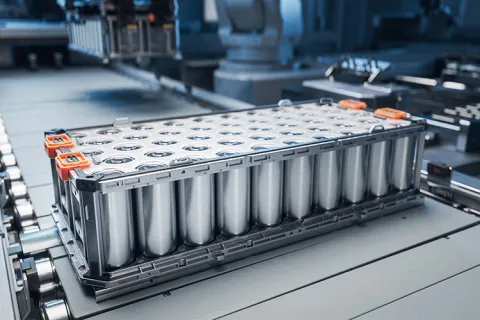
Batteries made in the U.S. must be cost-effective and high-performing, integrating elements such as digital twins, automation and AI-enabled smart manufacturing.
Putting the ‘AI’ in airplanes
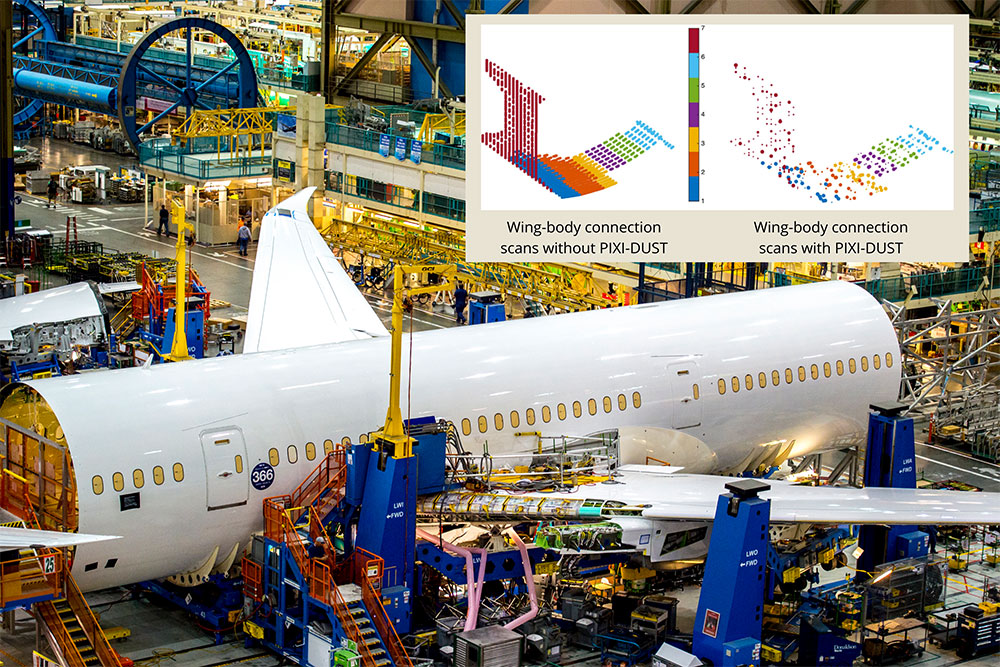
Assistant Professor Krithika Manohar used a machine learning algorithm to optimally predict shim gaps for Boeing airplanes, saving the company time and computational resources.
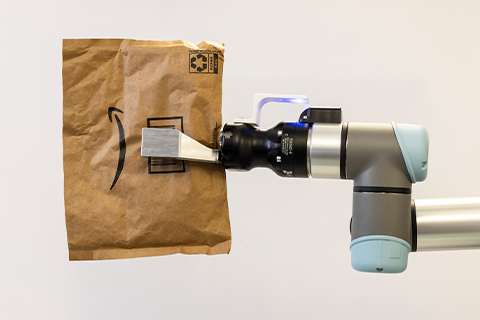
Robotics for manufacturing
Researchers are working on quantifying the ergonomic risk of Boeing technicians who perform hand layups of composite materials.
Research centers and institutes
Advanced Composites Center
The Advanced Composites Center is building a robust innovation ecosystem for industry and academia to advance the field of data-driven methods for composites manufacturing.
AI Institute in Dynamic Systems
The AI Institute in Dynamic Systems aims to develop the next generation of advanced machine learning tools for controlling complex physical systems by discovering data-driven models through optimal sensor selection and placement.
Boeing Advanced Research Collaboration
Through the Boeing Advanced Research Collaboration, Boeing-employed engineers work in the lab alongside faculty and students on joint research projects in the manufacturing and assembly of aircraft and spacecraft structures.
eScience Institute
The eScience Institute empowers researchers and students in all fields to answer fundamental questions using large, complex and noisy data.
All research centers & institutesAssociated faculty
Notable partners and sponsors
Argonne National Laboratory, Boeing, GE, Idaho National Laboratory, National Science Foundation, Oak Ridge National Laboratory, PACCAR, U.S. Department of Defense, U.S. Department of Energy, Pacific Northwest National Laboratory, UW Medicine.
Application areas
Advanced manufacturing
ME is using data science and AI to predict and improve manufacturing processes and lifecycles, create high-performance materials and improve ergonomic safety for employees.
Biomedical science and technology
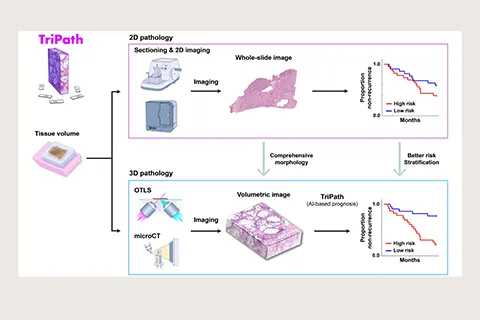
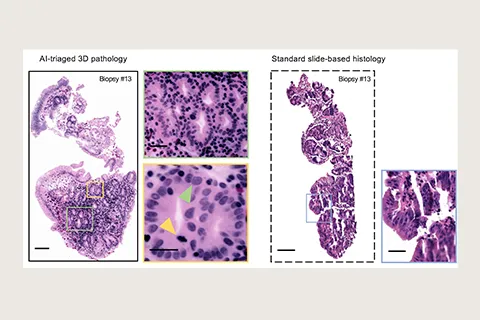
ME is analyzing 3D imaging and applying machine learning to identify cancer risks, improve traumatic brain injury models and more. Integrating AI can lead to better diagnoses and treatments, which could transform patient care.
Energy
Researchers are building more energy-efficient materials, modeling how to collect and convert energy from renewable sources and more.
Environment
Researchers are analyzing large-scale fluid flow data to learn about microplastics transport, using machine learning to improve underwater monitoring and more.
Robotics
Our faculty and students use data science and AI to advance robotics for a variety of applications.